1987
Reorganisation Of OBSS
OBSS underwent a further reorganisation as part of the Order’s continuing development and adaptation.
Ordo Byzantinus Sancti Sepulchri
Ordo Byzantinus Sancti Sepulchri (Byzantine Order of the Holy Sepulchre) is a Sovereign, Dynastic, Military, Order of Chivalry, founded by Emperor Constantine in A.D. 325 and dedicated to humanitarian, philanthropic, cultural and ecumenical activities. Membership is bestowed on persons of impeccable status, and is a prestigious form of public recognition for achievements and endeavours.
Each Priory is autonomous and free to decide where and how to involve its Knights and Dames for the benefit of the community.
The Magistral Seat of OBSS is established in Malta, the official residence of the Grand Master.

About Us
The Ordo Byzantinus Sancti Sepulchri (OBSS) was the first Order of the Byzantine Empire, founded in AD 325 by Emperor Flavius Augustus Constantine I, the Great, son of St. Helen, after defeating Maxentius near the Milvian Bridge, and his proclamation as Emperor of the Roman Empire in East and West. OBSS forms part of the historical heritage of the Sovereign Dynastic Military Orders of Chivalry, and to the Greek Orthodox Religious Rite of the Byzantine Empire.
It traces its regeneration to the fall of Constantinople, Capital of the Byzantine Empire on 29th May 1453, following a Turkish assault led by Mehmet II. This event severed the bonds between Eastern and Western Christendom and brought to the fore the “political” vocation of the Russian Grand Dukes to grant protection to the wandering and dispersed Knights of the Greek-Orthodox Order of the Holy Sepulchre, and those of the Order of St. Catherine of Mount Sinai, who had in common the Rule of St. Basil, and who since 1063 had fought in the various Crusades for the liberation of the Holy Land.
The upheaval provoked by the dissolution of the Byzantine Empire, and Russia’s political instability during the Sixteenth and Seventeenth centuries, led many of those Knights to seek refuge in the Patriarchates of Alexandria and Antioch.
The protection granted by the Grand Dukes of Russia was subsequently consolidated by the marriage in 1472 between Zoè [Sophia] Paleologina, niece of the last Emperor of Byzantium Constantine XI Paleologo, and Ivan III Veliky – the Great, Grand Prince of Moscow and of all Russia. This marriage brought to his Imperial House – as the bride’s dowry – the title of Pretender to the Throne of Byzantium and encouraged the absorption of many noble Houses and Chivalric Orders founded during the Byzantine Empire. Ivan III succeeded his father Basil the Blind, great politician and patron of the Arts, who achieved recognition as Sovereign of all Russia and made Moscow the heir of Byzantium’s traditions and the third Orthodox Rome.
Around 1660 Dimitrij VII Dimitrevic`, Grand Duke in exile of the Imperial House of Russia and descendant of Ivan and Zoè Paleologina, had established himself in Enos in the Ottoman Empire, where the dispersed Knights gathered around Him seeking protection. He organised and led them with great wisdom, earning their gratitude and devotion, until they proclaimed him Grand Master of the Order in 1669. Dimitrij VII Dimitrevic` incorporated the Order in his House, revising the Statutes and rendering the Grand Mastership hereditary in his family.
The Grand Ducal House of Moscow has preserved OBSS as a Dynastic Heritage and has never renounced its prerogatives, nor has it ever suffered the debellatio. OBSS was reorganized in the A.D. 1669 as ascertained, consolidated and recognised by Sultans, Emperors and Kings, continuing the dynastic succession to the present day.
The Dynastic profile of OBSS derives from its birth, from Emperor Constantine I. All his Legitimate Successors have had OBSS as Dynastic Heritage. As such it passed to the Grand Ducal House of Moscow Rjurik Dynasty from Empress Zoe Paleologina.
In 1669 Sultan Mohammed IV Osman granted Dimitrij VII Dimitrevic` recognition of His prerogatives as Head of the Name and Arms of the Rjurik Dynasty. The Sultan accorded Him the rank of Sovereign Bey and granted hospitality and protection to Him and to His Orders and cultural institutions.
By tradition the Head of the Confraternity of Saint Catherine of Somport also administered the Priory of the French Langue of the Order, which was recognised by the King of France Louis XIV, the “Roi Soleil”, by an Edict in 1671,
OBSS consolidated and flourished in various countries in East and West. In 1788 Duke Ercole III of Este authorized the establishment of the Order in the Duchy of Modena [Italy], granting citizenship of the Duchy to the Head of the Imperial House of Moscow and de jure recognition to His Orders and cultural institutions.
OBSS was confirmed under the Rule of St. Basil and assumed as one of its principal aims that of assisting Christian pilgrims visiting the Holy Land, recalling the ecumenical spirit of the “Edict of Milan” with which Constantine the Great had decreed that freedom of worship be guaranteed to the faithful of all Religions, particularly to Christians.
OBSS enjoys special privileges and recognitions in various Nations, where it is recognised as a Sovereign Dynastic Military Order of Chivalry. In virtue of its characteristics, OBSS enjoys the attributes and prerogatives of a Subject of International Law, similar to the Vatican and SMOM.
OBSS is a family Order, dynastic, patrimonial and non national.
It is a family Order, since by succession it belongs, by hereditary right, to the successor of the Grand Dukes of Russia, Rjurik Dynasty.
It is dynastic, as it was created by a Sovereign, dynastic Emperor, and since the present Grand Duke descends from a Sovereign dynasty which already ruled over Moscow, even though it is currently constrained to lead a private life for reasons of political exigencies; in fact no member of the family has ever suffered the debellatio.
It is patrimonial, in that it has an endowment of titles, dos honorum, equestrian and noble. Such endowment is not extinguished until all conferable titles are extinguished and thus constitutes the “magistral endowment” appertaining to the Grand Master and to the Prince High Patron.
It is non national, being an Order belonging to a former reigning family, distinct both from the State or Pontifical ones, and from the “private Orders” which are in reality private Associations.
OBSS underwent a further reorganisation as part of the Order’s continuing development and adaptation.
The Order was again reorganised as its structures and insignia continued to be adapted to contemporary requirements.
OBSS underwent another reorganisation in 2011, continuing its institutional development.
An Imperial Decree modified the Statute of OBSS and nominated Prof. Leonie Baldacchino as legitimate successor and Vicar Grand Master with immediate effect.
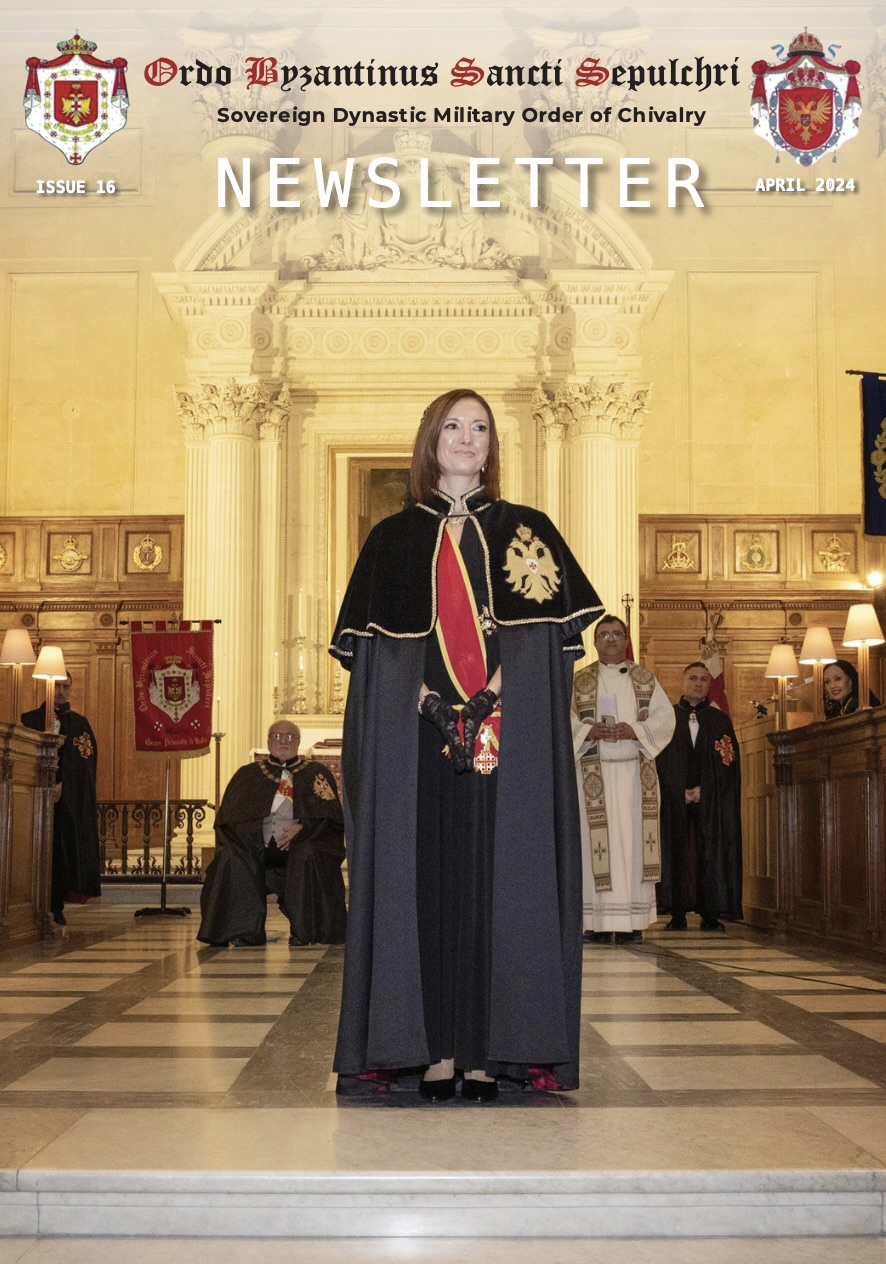
Prof. Leonie Baldacchino succeeds her father as Grand Master of the Ordo Byzantinus Sancti Sepulchri.
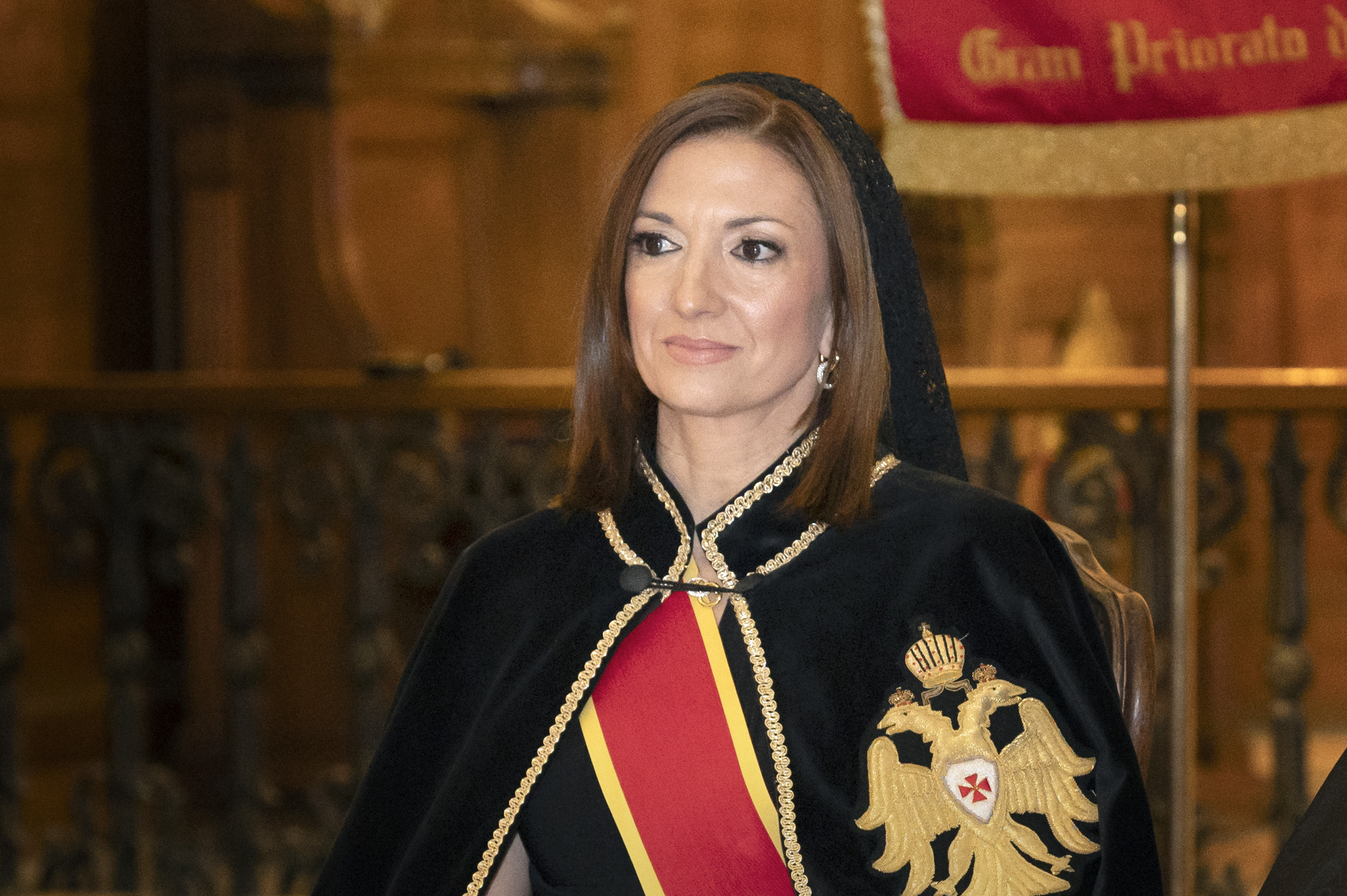
Current Grand Master · 2023–
A distinguished academic and leader in international educational, chivalric and humanitarian spheres, Prof. Baldacchino holds a Ph.D. in Entrepreneurship, an M.A. in Creativity and Innovation, and a B.Psy. (Hons.).
She serves as Pro-Rector for Internationalisation, Enterprise & Outreach at the University of Malta and leads OBSS initiatives that unite traditional chivalric values with humanitarian, social and cultural action.
Order structure
The institutional structure connects the Grand Master’s executive with colleges, councils and specialised commissions.
Ceremonies
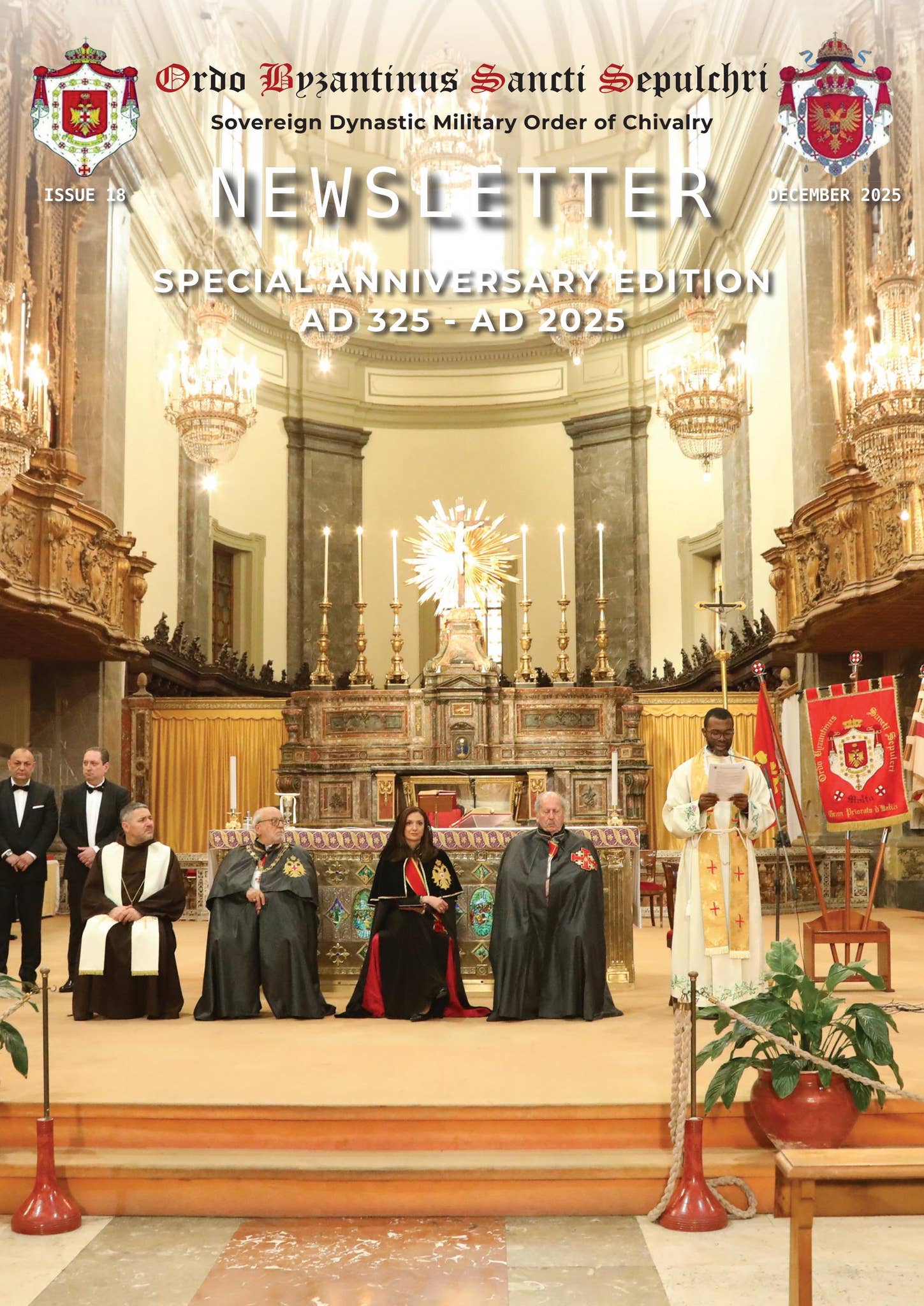
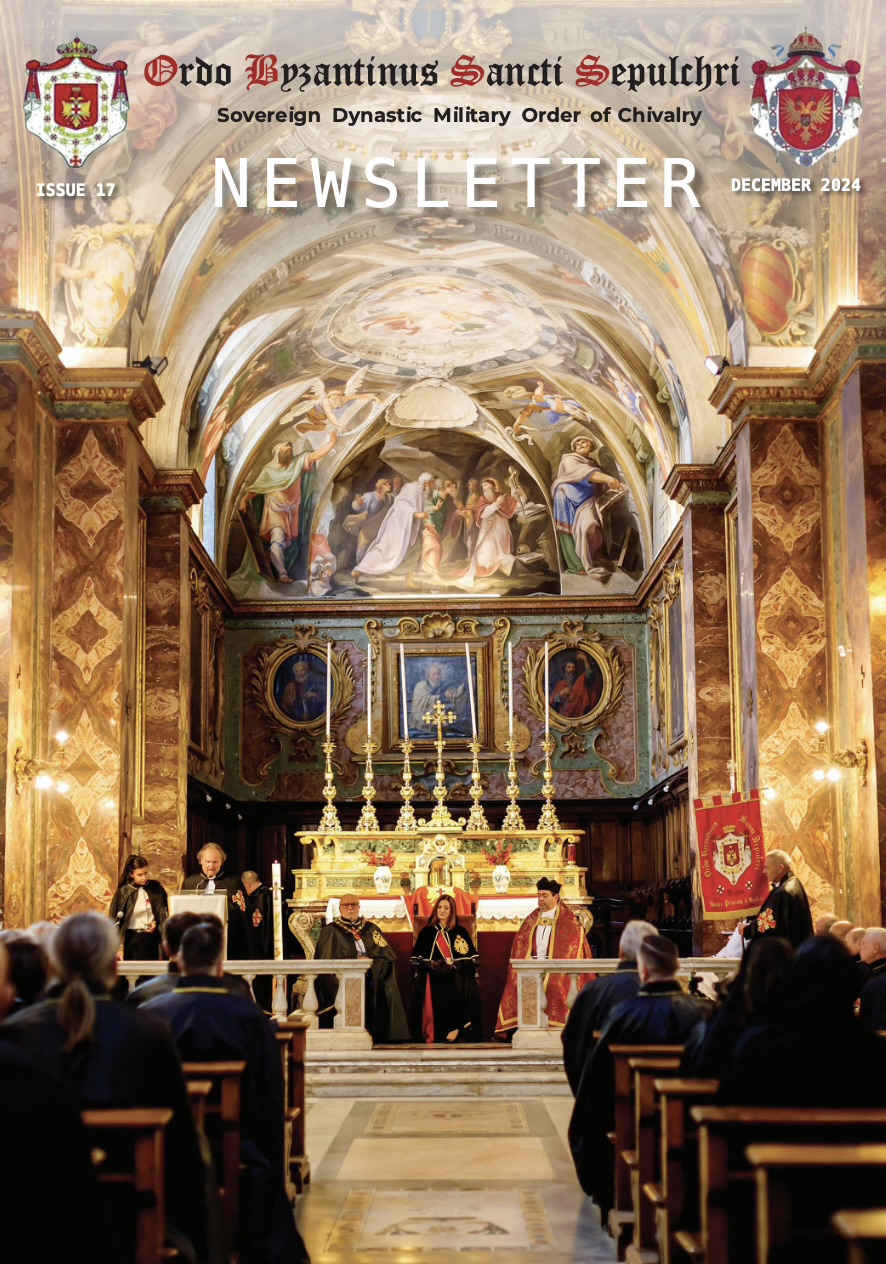
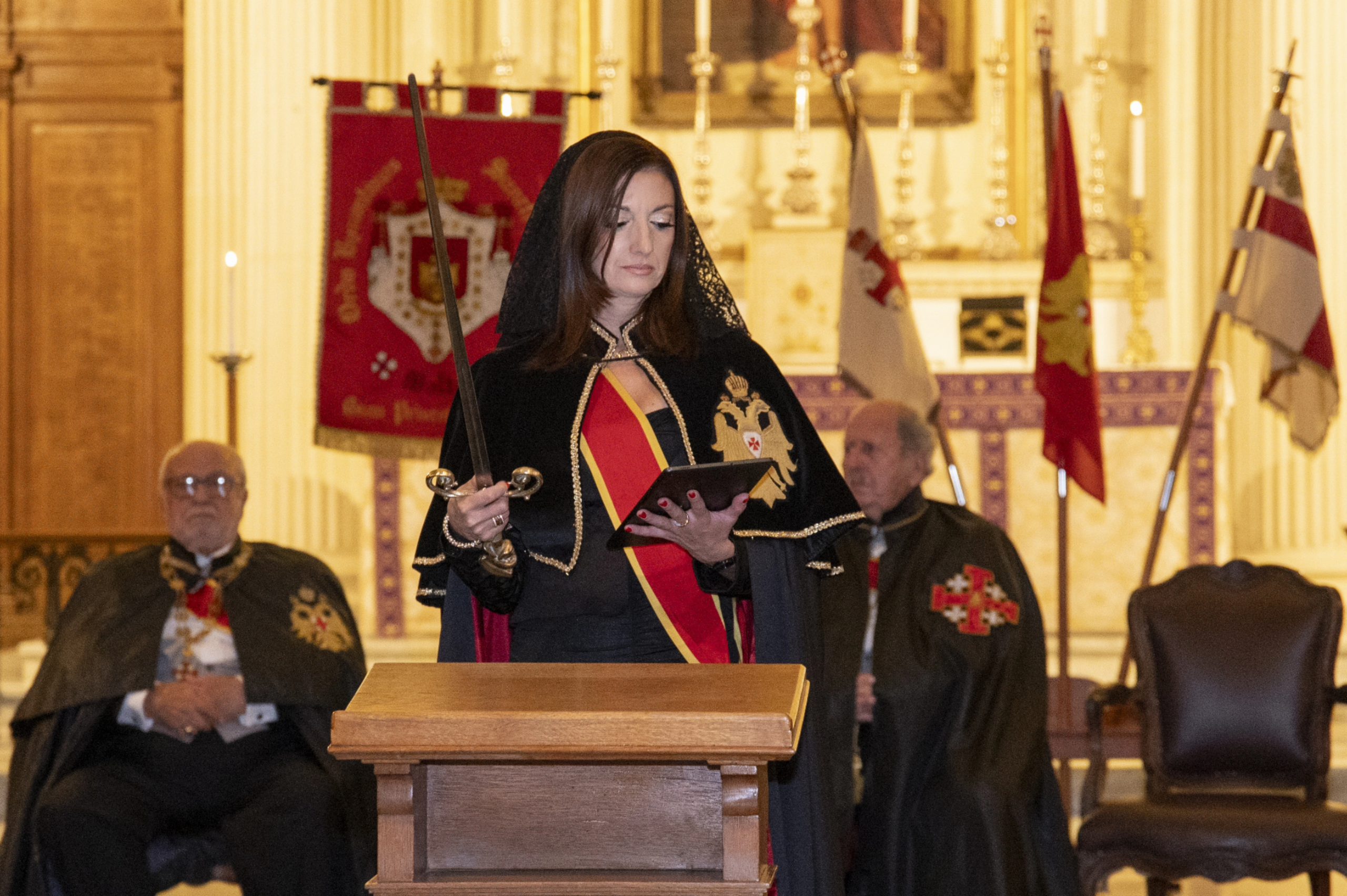
OBSS regularly holds Investiture Ceremonies during which membership is bestowed on new Knights and Dames, and promotions awarded to more established, deserving Members of the Order. The Ceremony begins with a Magistral Procession, a Prayer by the Prelate, and a Welcome Address by a Dignitary of the Order. It then proceeds to the Investiture Ceremony, which comprises the Religious-Equestrian Rite involving the Prelate, and the Solemn Investiture by the Grand Master. The Religious-Equestrian Rite includes the Postulants’ Oath of Loyalty, the Blessing of Insigna, Laying of the Hand, and the Presentation of Candles, Monastic Cordon, Sword and Spurs. The Solemn Investiture entails the Investiture with Sword, Presentation of Insigna and Mantle, and finally Installation as Knights and Dames of OBSS. This is followed by a Promotion Ceremony in which awardees are presented with their new Insigna.
The solemn sequence of procession, prayer, oath, blessing, investiture and installation described by OBSS.
Opening procession and formal welcome.
Oath of Loyalty, Blessing of Insigna and Laying of the Hand.
Candles, Monastic Cordon, Sword and Spurs.
Investiture with Sword, Insigna and Mantle, followed by Installation.
Newsletters
Admission & contact
For information about becoming a Knight or Dame of OBSS, contact the Chancery or send an admission enquiry using the form.